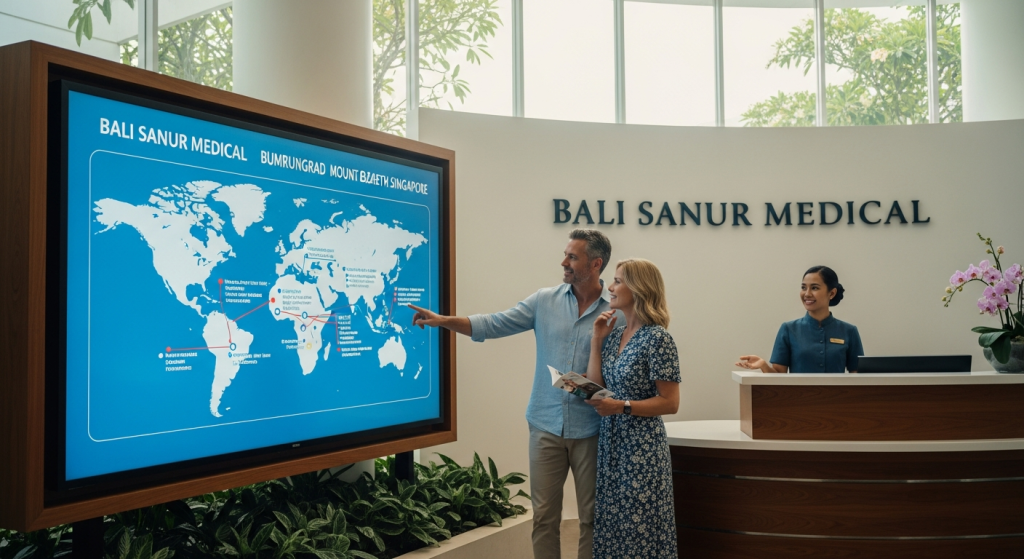
Bali Sanur Medical represents an integrated medical tourism hub, combining advanced clinical care with a serene recovery environment, distinguishing it from conventional medical destinations. This model offers international patients, including UHNW families and regional expats, comprehensive concierge services for procedures ranging from cardiology to stem cell therapy.
- Integrated Care: Access to JCI-accredited hospitals like BIMC Kuta and Siloam Hospitals Denpasar for specialized treatments.
- Sanur Recovery: Primary recovery zone offering quiet accommodation, wellness therapies, and proximity to medical facilities.
- Concierge Service: End-to-end support including medical visas, transfers, luxury accommodation, and personalized post-operative care.
The choice for international medical care presents a crucial decision. Patients weigh clinical excellence against recovery comfort, often finding a trade-off. Bali Sanur Medical redefines this balance, offering a distinct alternative to established hubs in Bangkok and Singapore.
The Bali Advantage: Beyond Clinical Excellence
Seeking medical care abroad often involves a singular focus on clinical outcomes, a paradigm that traditional medical tourism centers in Bangkok and Singapore have long championed. Bali, specifically its Sanur medical district, introduces a compelling counter-narrative: where world-class medical procedures integrate seamlessly with a restorative recovery environment. This approach resonates particularly with UHNW Australian families, regional patients seeking comprehensive 7-14 day packages, and expat retirees based on the island. While Bangkok’s Bumrungrad International Hospital, established in 1980, boasts extensive JCI accreditation and Singapore’s Mount Elizabeth Hospital, founded in 1979, offers cutting-edge technology, their urban settings often limit the post-procedure recuperation experience to a hotel room. Bali Sanur Medical shifts this focus. The island’s inherent wellness culture, from its traditional healing practices to its tranquil coastal zones, becomes an active component of the recovery process. Patients undergoing orthopedic recovery or post-cardiology rehabilitation find the calm atmosphere of Sanur, just 15 kilometers from Denpasar’s major medical centers, conducive to healing. This blend provides not just a medical procedure, but a holistic journey towards wellness, a distinction that busy cityscapes struggle to replicate. The average patient stay for complex procedures, including dental reconstruction or IVF cycles, typically extends to 10-14 days, making the recovery environment a paramount consideration for sustained well-being. This integrated model positions Bali as a leader in patient-centric medical tourism, moving beyond mere procedural efficiency to encompass the full spectrum of health and recovery.
Clinical Standards & Specializations: Bali’s Medical Hubs
Bali’s medical infrastructure has seen significant investment and development, establishing it as a credible destination for a wide range of specialized treatments. The island hosts several key medical facilities, each contributing to its growing reputation. BIMC Hospital Kuta, operational since 1998, holds international accreditation, offering comprehensive services in aesthetic surgery, dental care, and general medical care, often catering to expatriates and tourists in the Kuta-Seminyak corridor. A 20-minute transfer from Sanur, BIMC provides a familiar standard of care. Siloam Hospitals Denpasar, part of a prominent Indonesian hospital network, provides advanced cardiology, orthopedic, and general surgical services. Its Nusa Dua facility further expands specialized care, including modern IVF clinics and advanced diagnostic imaging. The hospital group maintains JCI accreditation for several of its facilities, reflecting a commitment to international quality and patient safety standards. RSUP Prof. Ngoerah (Sanglah Hospital) in Denpasar serves as the province’s largest public referral hospital, operating with over 800 beds and offering a broad spectrum of specialties, including neurosurgery and oncology. While a public institution, its specialized departments provide high-level care, particularly for complex cases. The upcoming Bali International Hospital, slated for completion by 2025 in Sanur, promises to elevate Bali’s medical tourism offering further, with a focus on cutting-edge technology and specialized centers for stem cell therapy and advanced diagnostics. This facility, backed by government initiatives, aims to attract a global patient base, including those seeking advanced regenerative medicine. Patients considering Bali for procedures like stem cell therapy, IVF, or complex orthopedic surgeries access a network of facilities capable of delivering high-quality, internationally benchmarked care, often with a 30-50% cost advantage compared to Western counterparts. This network, with Sanur at its heart for recovery, ensures access to diverse medical expertise within a compact geographical area.
Cost Efficiency: A Clear Comparison
The financial aspect of international medical care often drives patient decisions, and Bali presents a compelling value proposition compared to its regional competitors. While Singapore is renowned for its advanced medical technology and highly specialized surgeons, these come with a premium, often 20-40% higher than equivalent procedures in Bangkok. Bali Sanur Medical, leveraging the island’s robust infrastructure and competitive operational costs, delivers significant savings without compromising on quality or safety. For instance, a dental implant procedure in Bali, including consultation and follow-up, typically ranges from USD 1,500 to 2,500, whereas the same procedure in Bangkok might cost USD 2,000 to 3,500, and in Singapore, upwards of USD 3,000 to 5,000. Similarly, a comprehensive IVF cycle in Bali can be secured for approximately USD 5,000 to 8,000, presenting a substantial reduction from the USD 8,000 to 12,000 often seen in Bangkok, and USD 10,000 to 15,000 in Singapore. Cardiac diagnostic packages or basic orthopedic surgeries follow a similar trend, showing savings of 20-40% when choosing Bali. These figures become even more attractive when factoring in recovery and accommodation costs. A 14-day recovery package in a luxury villa in Sanur, inclusive of transfers and post-operative care, often costs less than a comparable hotel stay in downtown Bangkok or Singapore. The Indonesian Rupiah (IDR) exchange rate further enhances this affordability for international patients. This economic advantage, combined with the comprehensive concierge services offered by Bali Sanur Medical, allows patients to allocate their budget more effectively, ensuring not only access to high-quality medical treatment but also a comfortable, stress-free recovery period, making the overall experience more accessible and appealing to a wider demographic, including expat retirees and regional families. Find detailed procedure costs and package options at our recovery packages page.
Recovery & Wellness: The Sanur Distinction
The true differentiator for Bali Sanur Medical lies in its recovery environment, primarily centered in the tranquil Sanur district. Unlike the high-rise medical districts of Bangkok or the bustling city-state of Singapore, Sanur offers a serene, low-key atmosphere that actively contributes to patient recuperation. This coastal zone, approximately 25 kilometers from Ngurah Rai International Airport (DPS), provides a stark contrast to urban intensity. Patients completing procedures at BIMC Kuta or Siloam Hospitals Denpasar experience a short, comfortable transfer to their chosen recovery accommodation in Sanur. Here, the focus shifts from clinical intervention to holistic wellness. Sanur hosts numerous boutique hotels and private villas, many equipped with accessibility features and staffed with personnel trained in supporting post-operative guests. Physiotherapy sessions, essential for orthopedic recovery, can be arranged in private settings or specialized clinics within Sanur, often integrated with traditional Balinese therapies. Nutritional support, tailored to individual dietary needs and recovery protocols, is readily available through private chefs or specialized catering services. The emphasis extends beyond physical healing to mental well-being; the quiet beaches, gentle morning walks, and access to mindfulness practices provide a calming influence, crucial for a positive recovery trajectory. This environment is particularly beneficial for patients undergoing stress-sensitive treatments like IVF or those needing extended recovery periods for major surgeries. The local community’s warmth and the absence of urban noise pollution create an atmosphere conducive to deep rest and rejuvenation. This deliberate choice of Sanur as the primary recovery zone underscores the philosophy of Bali Sanur Medical: that healing is not merely the absence of illness, but a return to complete well-being, facilitated by surroundings that nourish both body and mind. More on our wellness approach can be found at our wellness programs page.
Logistics & Concierge Services: Seamless Journeys
Navigating international medical travel often presents complex logistical challenges, a hurdle that Bali Sanur Medical meticulously addresses through its comprehensive concierge services. This dedicated support system differentiates Bali’s offering from a self-managed medical trip to Bangkok or Singapore. For UHNW families, regional patients, and expat retirees, a seamless journey is paramount. The process begins with medical visa assistance, guiding patients through the necessary documentation and application processes, ensuring compliance with Indonesian immigration regulations. This typically involves coordination with hospitals and the Directorate General of Immigration, a process that can take 5-7 business days. Upon arrival at Ngurah Rai International Airport (DPS), patients are met with private, luxury transfers directly to their pre-arranged accommodation in Sanur or directly to a medical facility if immediate care is required. Transportation between Sanur and various medical hubs like BIMC Kuta (approx. 20 km), Siloam Denpasar (approx. 15 km), or Sanglah Hospital (approx. 15 km) is managed with comfort and efficiency. Accommodation options range from five-star resorts to private luxury villas, all vetted for quality and proximity to essential services. Language barriers, a common concern in foreign medical settings, are mitigated by dedicated patient coordinators fluent in English and other relevant languages, providing translation services during consultations and throughout the recovery period. Family offices arranging medical evacuations find the coordinated approach invaluable, ensuring continuity of care and robust support systems. This end-to-end management, from pre-arrival planning to post-operative follow-up, removes the burden of logistics from the patient, allowing them to focus entirely on their health and recovery. For instance, a 7-day post-dental recovery package includes all transfers, accommodation, and scheduled follow-ups, demonstrating the integrated nature of the service. This comprehensive support system ensures a stress-free and dignified medical journey, a cornerstone of the Bali Sanur Medical promise.
Alternatives: Bangkok & Singapore Insights
While Bali Sanur Medical offers a distinct advantage, a comprehensive comparison requires an honest look at the established alternatives: Bangkok and Singapore. Both cities have cultivated strong reputations in medical tourism over decades, drawing millions of patients annually. Singapore, with its highly regulated healthcare system and world-class specialists, particularly in complex surgeries like organ transplants and oncology, often represents the pinnacle of medical technology in Southeast Asia. Hospitals like Mount Elizabeth and Gleneagles are JCI-accredited and equipped with state-of-the-art facilities. However, this comes at a significant cost premium, often making it prohibitive for budget-conscious patients or those seeking elective procedures. The urban environment, while efficient, offers little in terms of a dedicated recovery retreat; patients typically recover in city hotels, far from tranquil surroundings. Bangkok, on the other hand, provides a more cost-effective option than Singapore, with hospitals like Bumrungrad International and Samitivej offering a vast array of services, from cosmetic surgery to cardiology. Its medical tourism infrastructure is highly developed, with many English-speaking staff and extensive international patient departments. Yet, Bangkok’s sheer size and urban sprawl can be overwhelming. Traffic congestion is notorious, making transfers between hospital, accommodation, and recovery facilities time-consuming and stressful. The city’s vibrant energy, while attractive for tourism, might not be conducive to the quiet introspection and deep rest required for optimal recovery, especially for longer stays. The focus often remains on the procedure itself, with less emphasis on the integrated wellness and recovery environment that Bali Sanur Medical prioritizes. For patients prioritizing a holistic, serene recovery experience alongside high-quality medical care, the intensity and urban focus of Bangkok and Singapore can represent a significant drawback, contrasting sharply with Bali’s restorative approach. Refer to Wikipedia’s overview of medical tourism in Thailand for further context.
The decision for international medical care extends beyond clinical proficiency; it encompasses the entire patient journey. Bali Sanur Medical offers a compelling, integrated solution, blending advanced treatments with a restorative recovery environment. Discover how our personalized concierge services can redefine your medical tourism experience. Connect with us today to plan your tailored health journey in Bali.